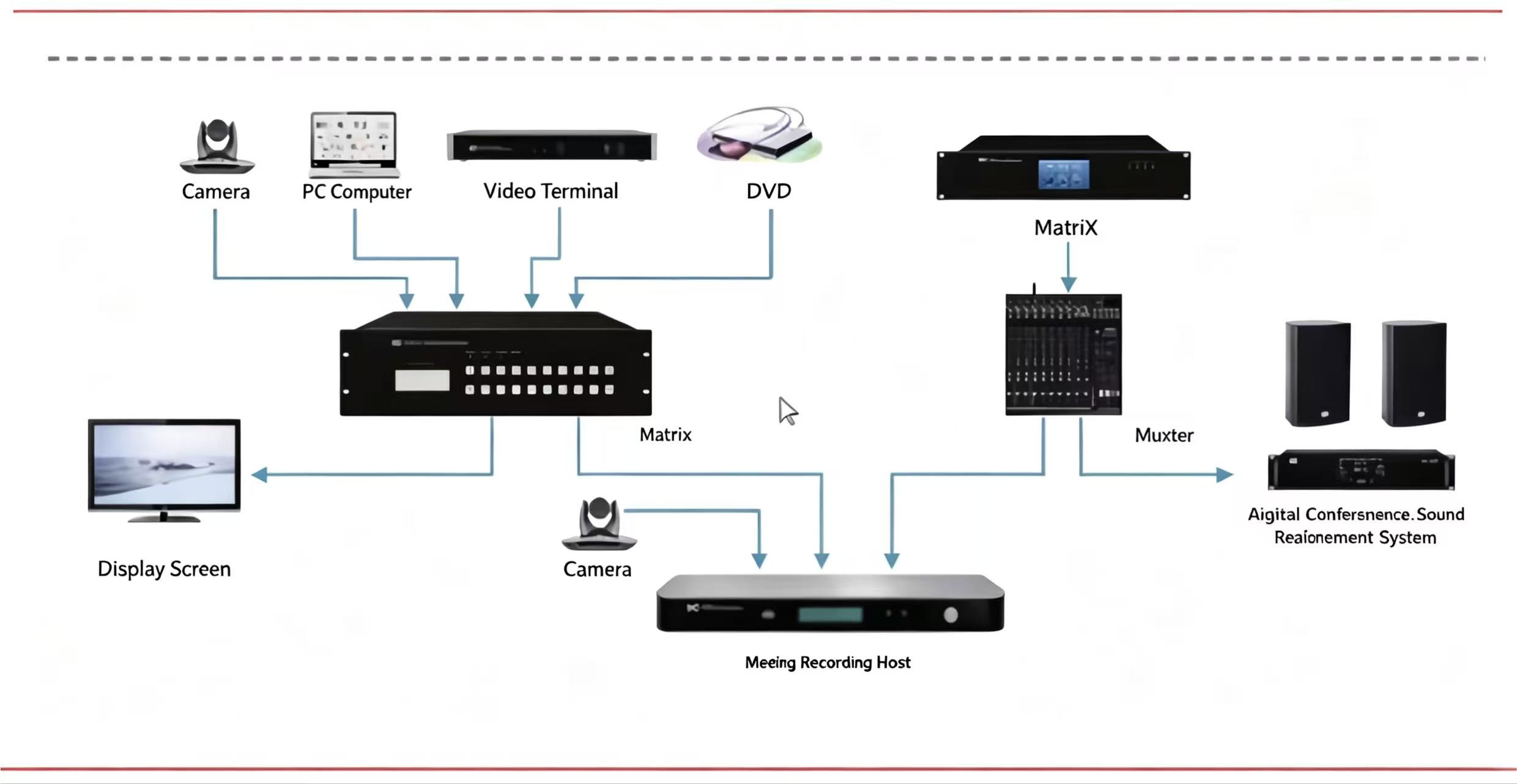
In simple terms, a recording system integrates and synchronously records video, audio, and image signals from electronic devices (including computers and
video display units) captured on-site, generating standardized streaming media files for live broadcasting, storage, post-production editing, and on-demand playback.
Recording Host
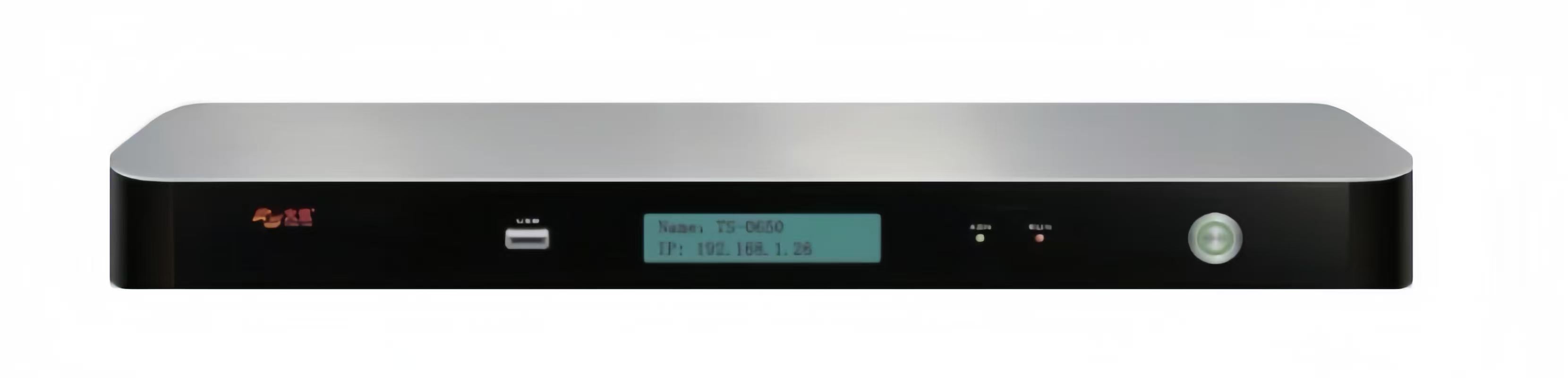
(1) The fully automated five-camera recording system employs integrated hardware equipment and an embedded Linux operating system, featuring a B/S architecture design. It highly integrates various modules including high-definition video acquisition, recording modules, live streaming, image recognition and tracking, director switching, image segmentation and stitching, and local video playback output, enabling functions such as live video streaming, intelligent video capture, high-definition recording, touchscreen control, and image recognition and tracking.
(2) The video system employs the H.264 High Profile 4.2 encoding standard, utilizing a pure hardware DSP for capturing high�definition video and VGA signals. It features four built-in high-definition camera signal input modules, two computer signal input modules,and two DVI video signal input ports, supporting up to eight video signal inputs with compatible formats including HDMI, VGA, HD-SDI,DVI, and IP.
(3) It features two built-in RS-232 or RS-485 interfaces, enabling remote control of the camera's rotation and zoom functions.
(4) Paired with a 7-inch control panel for remote operation, users can monitor the input source screen or switch between input sources by tapping the panel buttons. The system also supports switching recording modes, starting, and stopping the host, along with real-time VGA screen locking/unlocking functionality.
(5) The host's automatic display screen shows the recording host's IP address and hard disk storage capacity in real time.
(6) Support Andiord and the IOS mobile APP for hosting and live broadcasting.




 +86-4000-250-668


 248748436@qq.com